G3N3R810(N)
G3N3R810(N)
G3N3R810(N)
2026

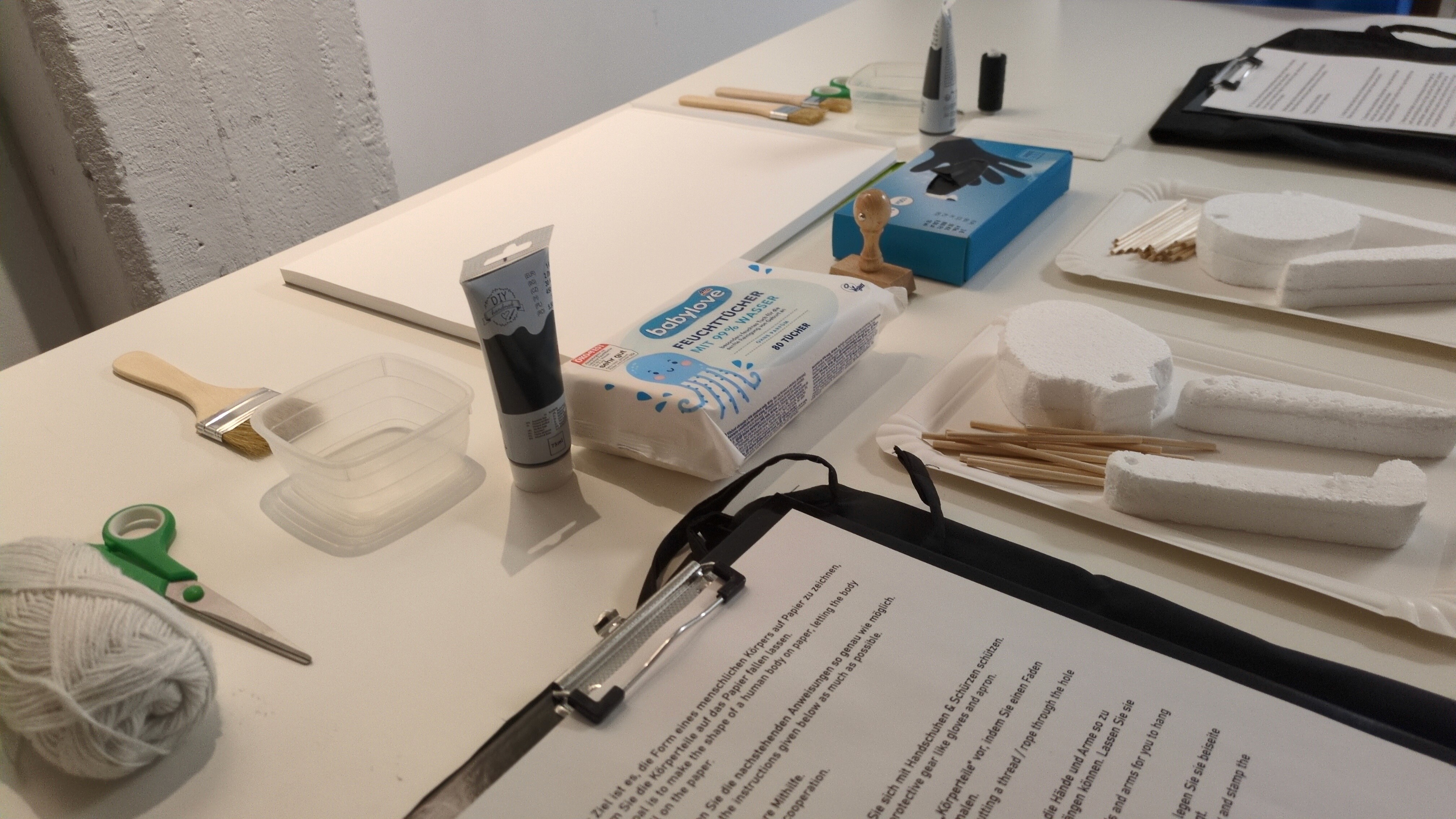

Let us make a human body! The body parts are given to you, I stand as the tool ready to be used by you. You follow the instructions, hang the parts from the fingers of the tool, instruct the tool, "Let it fall," or "Move it to this side." The end result is to be stamped by the name of who owns it, and who made it is completely forgotten, not a name to utter, no way of knowing whose piece it is. And yet, the tool is still there, and so is the owner. Is it truly evil, or did the participant have any claim in this work in the same place?
A performance also functioning as a workshop asks any willing participant to put on gloves and aprons and follow the instructions given to them, mimicking a working environment or an art station with the "tool" being a replacement for how artificial intelligence is used: the control is only partially given to the participant, whose only power is words or nudges to state directions.
The body parts of a decapacitated human being evokes the exploitation of others, while the participant too is no different from these limbs made of stryofoam. An artwork is "generated" with lots of room for error, a "work" emerges.
Let us make a human body! The body parts are given to you, I stand as the tool ready to be used by you. You follow the instructions, hang the parts from the fingers of the tool, instruct the tool, "Let it fall," or "Move it to this side." The end result is to be stamped by the name of who owns it, and who made it is completely forgotten, not a name to utter, no way of knowing whose piece it is. And yet, the tool is still there, and so is the owner. Is it truly evil, or did the participant have any claim in this work in the same place?
A performance also functioning as a workshop asks any willing participant to put on gloves and aprons and follow the instructions given to them, mimicking a working environment or an art station with the "tool" being a replacement for how artificial intelligence is used: the control is only partially given to the participant, whose only power is words or nudges to state directions.The body parts of a decapacitated human being evokes the exploitation of others, while the participant too is no different from these limbs made of stryofoam. An artwork is "generated" with lots of room for error, a "work" emerges.